


The World Bank has sharply downgraded its global growth forecast for 2025, reducing it by 0.4 percentage points to 2.3%. The institution warned that escalating tariffs and mounting global uncertainty have become a “significant headwind” for most economies.
In its Global Economic Prospects report, released on Tuesday, the Bank lowered its projections for nearly 70% of all economies—including major players such as the United States, China, and Europe, alongside six key emerging market regions. The revised outlook paints a troubling picture of a world economy struggling to regain momentum amid heightened trade conflicts and policy unpredictability.
Read More: Global Economic Confidence Falters as Rising Trade Policy Turmoil Threatens Growth Momentum in 2025
Trade Tensions Take a Toll
Global trade has entered a volatile phase following a string of tariff increases initiated under U.S. President Donald Trump’s administration. These policy shifts have raised the effective U.S. tariff rate from below 3% to the mid-teens, marking the highest level in almost a century.
In response, several nations—most notably China—have retaliated with counter-tariffs, amplifying disruptions in the global supply chain. The World Bank is the latest major financial body to cut its global growth outlook, attributing much of the decline to these erratic trade policies.
While U.S. officials continue to argue that tax cuts and investment surges will offset short-term economic pain, global markets remain unconvinced. According to the report, 2025 could record the weakest global growth outside a recession since 2008.
A Slow Decade Ahead
The World Bank projects that by 2027, global GDP growth will average 2.5%, potentially marking the slowest decade of expansion since the 1960s. The decline reflects broader structural challenges, including rising protectionism, geopolitical tensions, and a slowdown in productivity.
Global trade is also losing momentum. The report forecasts trade growth of only 1.8% in 2025, down from 3.4% in 2024 and well below the 5.9% average seen during the 2000s. These figures underscore how restrictive trade measures and fragile confidence are strangling international commerce.
Inflation Pressures and Economic Risks
Global inflation is expected to remain elevated at 2.9% in 2025, above pre-pandemic levels. The World Bank attributes this persistence to higher tariffs, tighter labor markets, and ongoing supply chain bottlenecks.
The report cautioned that risks to the global economy are “decidedly tilted to the downside.” Its models indicate that if U.S. tariffs were to increase another 10 percentage points—along with equivalent retaliation by other nations—global growth could fall by an additional 0.5 percentage points.
Such an escalation would likely lead to a freeze in global trade, a collapse in investor confidence, and financial market turmoil in the latter half of 2025. Despite these threats, the Bank maintains that the risk of a global recession remains below 10%, suggesting resilience in some regions.
The U.S.–China Trade Dispute: A Key Flashpoint
The ongoing U.S.–China trade dispute continues to unsettle global markets. Top officials from both nations met in London this week to seek common ground on contentious issues, including tariffs and restrictions on rare earth minerals.
Ayhan Kose, the World Bank’s Deputy Chief Economist, compared the current global climate to “fog on a runway,” explaining that persistent uncertainty slows investment and clouds future planning. Yet, Kose remains cautiously optimistic, noting that dialogue between nations could gradually lift the fog.
He emphasized that global supply chains are adapting to new trade realities rather than collapsing outright. A modest rebound in global trade—up to 2.4% in 2026—could occur if stability returns. Kose also highlighted that technological innovation, particularly in artificial intelligence, might help offset some economic drag.
Signs of Resilience in Developing Economies
Despite the slowdown, China, India, and other emerging economies continue to deliver steady growth. Many nations are actively pursuing new trade partnerships that may yield long-term benefits.
The World Bank expects emerging markets and developing economies to grow by 3.8% in 2025, slightly down from the 4.1% forecast in January. However, the report warns that poorer countries are still at risk of falling further behind.
By 2027, developing economies (excluding China) are expected to see per capita GDP remain 6% below pre-pandemic levels. According to the report, it could take up to two decades for some of these nations to recover the economic losses sustained during the 2020s.
Regional Forecasts: Uneven Performance Across the Globe
The United States, the world’s largest economy, saw its 2025 growth forecast slashed to 1.4%, down nearly one percentage point from January projections. The Bank also trimmed the 2026 forecast to 1.6%, citing the drag from trade barriers, market volatility, and falling business confidence.
In contrast, the White House dismissed the World Bank’s pessimism. Spokesperson Kush Desai pointed to stronger-than-expected recent data, including a 25% surge in business equipment investment in the first quarter of 2025 and continued job and income growth.
“The World Bank’s predictions are untethered from reality,” Desai said, arguing that an upcoming budget package and tax relief plan would “turbo-charge America’s economic resurgence under President Trump.”
Across Europe and Japan, growth projections also deteriorated. The World Bank cut the Eurozone’s growth forecast by 0.3 percentage points to 0.7%, while Japan’s was reduced by half a point to the same level.
For Mexico, which is heavily dependent on trade with the United States, the growth outlook dropped sharply by 1.3 percentage points to 0.2% in 2025.
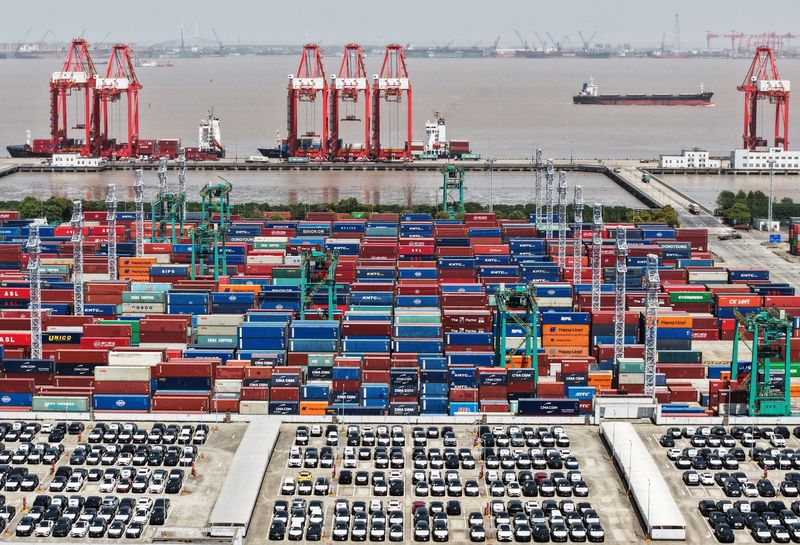
Meanwhile, China’s forecast remained stable at 4.5%, as Beijing still possesses monetary and fiscal capacity to stimulate its economy through targeted spending and policy support.
A Fragile but Hopeful Outlook
Despite the grim forecasts, the World Bank maintains that the global economy still has pathways to recovery. Trade may resume moderate growth as countries negotiate new deals and adapt to shifting economic dynamics.
Kose expressed cautious optimism that uncertainty will eventually decline, enabling trade to “start running again, though at a slower pace.” The development of AI technologies and diversification of global supply chains could serve as growth catalysts in the coming years.
Still, the report concludes that the global outlook has deteriorated substantially since early 2025. Advanced economies are expected to grow only 1.2%, while weaker trade flows, stubborn inflation, and geopolitical tensions continue to restrain progress.
Frequently Asked Questions:
Why did the World Bank cut its global growth forecast for 2025?
The World Bank reduced its 2025 global growth forecast to 2.3% due to rising tariffs, weakening trade, and growing global uncertainty. These factors are limiting investment, slowing exports, and straining confidence in both advanced and emerging economies.
How have trade tensions affected global economic growth?
Escalating U.S.–China trade tensions and tariff hikes have disrupted global supply chains, increased production costs, and weakened international trade. The World Bank warns that continued trade barriers could further slow global GDP and heighten financial instability.
Which countries are most impacted by the slowdown?
Advanced economies such as the United States, Japan, and European nations are seeing slower growth due to weaker investment and trade. Emerging markets like Mexico and several developing nations are also struggling to recover from the global slowdown.
What is the projected growth rate for global trade in 2025?
Global trade is expected to grow by only 1.8% in 2025, down from 3.4% in 2024 and far below pre-pandemic averages. The decline reflects the combined impact of tariffs, policy uncertainty, and slowing global demand.
Is the world heading toward a recession?
According to the World Bank, the risk of a global recession remains below 10%, though the outlook is fragile. Economists caution that further tariff hikes or political shocks could push growth even lower.
How are developing economies expected to perform?
Developing and emerging economies are forecast to grow by 3.8% in 2025, a slight decline from earlier estimates. However, the World Bank notes that many poorer countries could take two decades to fully recover from the economic disruptions of the 2020s.
What is the inflation outlook for 2025?
Global inflation is projected to remain elevated at 2.9%, driven by tariff increases, tight labor markets, and persistent supply chain issues. This level is still higher than the pre-COVID-19 average.
Conclusion
The World Bank’s revised global growth forecast serves as a critical warning to policymakers and investors alike. The combination of rising tariffs, persistent inflation, and mounting geopolitical tensions has created a fragile economic environment that demands urgent global cooperation. While the immediate outlook appears challenging, there is still room for cautious optimism. Strengthening trade partnerships, embracing innovation such as artificial intelligence, and promoting transparent economic policies could help restore stability and confidence. The coming years will determine whether the world can navigate these headwinds and steer toward a more sustainable and inclusive era of global growth.
